Where Is Electric Fencing Used?
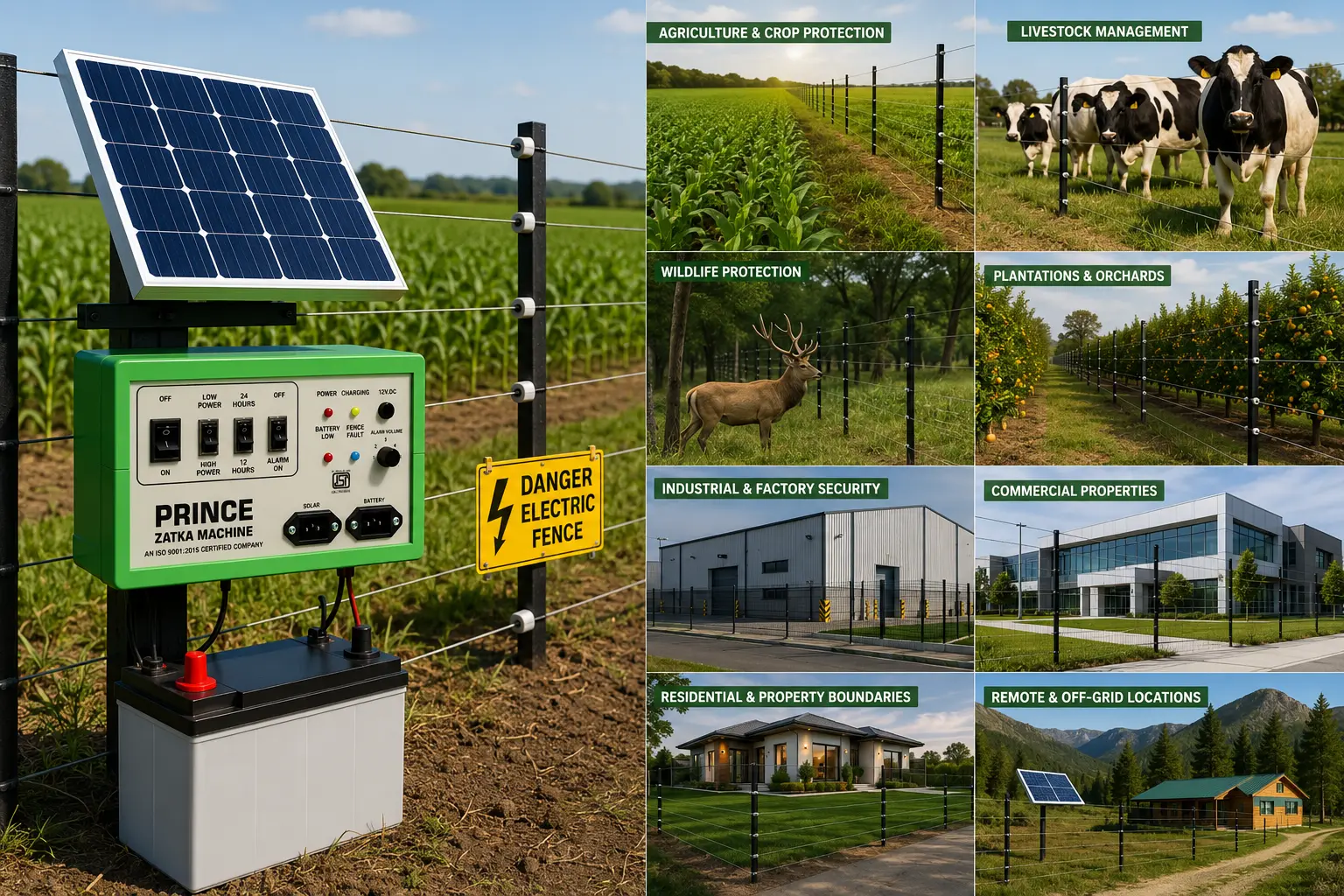
Electric fencing is a versatile perimeter protection solution used across different industries and applications. While it is widely known for agricultural and livestock protection, modern electric fencing systems can also be used for wildlife management, plantations, industrial properties, commercial sites, residential boundaries, and remote locations.
A properly designed electric fencing system creates a controlled perimeter that can help deter unwanted animals or unauthorized access.
What Is Electric Fencing?
Electric fencing is a boundary system that uses an energizer to send controlled electrical pulses through conductive fence wires. When the circuit is completed through contact and the grounding system, the pulse acts as a deterrent.
Solar-powered electric fencing adds a solar panel and battery system, making it particularly useful where reliable grid electricity is unavailable.
1. Agriculture and Crop Protection
One of the most common applications of electric fencing is protecting agricultural land.
Farms and crop fields can face damage from wild animals and stray animals. Electric fencing can create a protective boundary around agricultural properties and help reduce unwanted animal entry.
Solar-powered fencing is particularly useful for large or remote farms where access to conventional electricity may be limited.
2. Livestock Management
Electric fencing can also be used to manage livestock such as cattle, sheep, horses, and other farm animals.
It can help control animal movement within designated areas and can be used to divide grazing areas or protect specific sections of a property.
The fencing system should always be designed according to the animal type, property conditions, and applicable safety requirements.
3. Wildlife Protection and Conservation
Electric fencing has applications in wildlife management and conservation.
It can help protect crops and properties from wildlife intrusion while also being used in controlled wildlife areas and conservation environments.
Proper fence design is important because different animals have different movement patterns and physical characteristics.
4. Orchards and Plantations
Orchards, plantations, vineyards, and other cultivated areas can benefit from perimeter protection.
Electric fencing can help protect valuable plants and crops from unwanted animal movement while creating a defined boundary around the property.
5. Industrial and Factory Premises
Electric fencing can also be used as an additional layer of perimeter security for industrial properties.
Factories, warehouses, storage areas, and large industrial compounds may require controlled access around their boundaries.
When properly designed and installed, an electric fence can act as a deterrent against unauthorized entry and complement other security measures.
6. Commercial Properties
Commercial properties with large outdoor areas can use electric fencing as part of their overall perimeter security strategy.
Warehouses, business premises, storage facilities, and other commercial locations may use fencing together with gates, lighting, alarms, cameras, and access-control systems.
7. Residential Properties
Electric fencing can also be considered for certain residential properties, farmhouses, and private compounds where permitted by local regulations.
For residential applications, installation should pay particular attention to public access, children, pets, emergency exits, and applicable safety requirements.
8. Remote and Off-Grid Locations
Remote properties often face a challenge when conventional electricity is unavailable or unreliable.
Solar electric fencing can be a practical option for these locations because solar energy can power the system through a solar panel and battery.
This makes solar-powered fencing suitable for remote farms, plantations, rural properties, and other off-grid applications.
9. Forestry and Plantation Areas
Forestry and plantation areas may cover large boundaries and can be located far from urban infrastructure.
Solar electric fencing can provide a flexible perimeter solution for selected forestry and plantation applications, depending on the terrain, security requirements, and local regulations.
Why Choose Solar Electric Fencing?
Solar electric fencing combines electric perimeter protection with renewable solar power.
Some key advantages include:
• Suitable for remote locations
• Reduced dependence on grid electricity
• Flexible installation options
• Useful for large outdoor areas
• Can support agricultural and perimeter security applications
• Solar energy provides a renewable power source
• Can be integrated with other security measures
How Does an Electric Fence System Work?
A typical electric fencing system consists of several important components:
Solar Panel → Battery → Energizer → Fence Wire → Insulators → Grounding System
The solar panel generates energy and charges the battery. The energizer uses the available power to generate controlled electrical pulses that travel through the fence wires.
The grounding system completes the electrical circuit and is an important part of proper system operation.
Choosing the Right Electric Fence System
The right electric fencing solution depends on several factors:
• Type of property
• Purpose of the fencing
• Fence length
• Terrain and environmental conditions
• Type of animals or security requirements
• Availability of sunlight
• Power requirements
• Local safety standards and regulations
A professional assessment can help determine the appropriate fence design, energizer, grounding system, and accessories for the application.
Electric Fencing for Modern Security Needs
From agricultural fields and livestock areas to industrial properties and remote locations, electric fencing can serve many different perimeter protection requirements.
Solar-powered systems make electric fencing especially useful in locations where access to conventional electricity is limited.
The most effective solution is one that is properly designed, correctly installed, regularly maintained, and used according to applicable safety requirements.
Conclusion
Electric fencing is no longer limited to agricultural applications. Today, it can be used across agriculture, livestock management, wildlife protection, plantations, industrial properties, commercial premises, residential boundaries, and remote locations.
With the addition of solar power, electric fencing can provide a practical option for properties that require perimeter protection without relying entirely on conventional electricity.
Prince Zatka Machine provides solar fencing solutions for different outdoor security and perimeter protection requirements. Choosing the right system according to the property and application can help create a reliable and effective fencing solution.